Crafting a Modern Brand Identity with the Letter E Template
There is a distinct power in the letter 'E'. As the most frequently used letter in the English alphabet, it carries a sense of familiarity and ease. When you see it, you instantly recognize it, making it a fantastic anchor for a brand. But how do you take such a common character and make it feel fresh, technological, and undeniably yours? That is the challenge many designers and entrepreneurs face. They need a symbol that feels both accessible and innovative—a design that bridges the gap between a traditional initial and a futuristic digital concept. This is where a well-crafted vector template comes into play, offering a blueprint for visual communication that stands out in a crowded marketplace.
Beyond the Basic Letterform
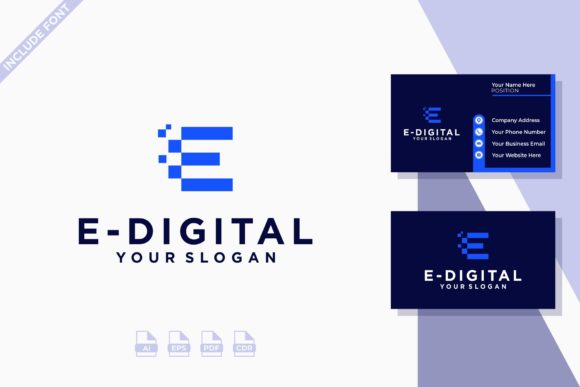
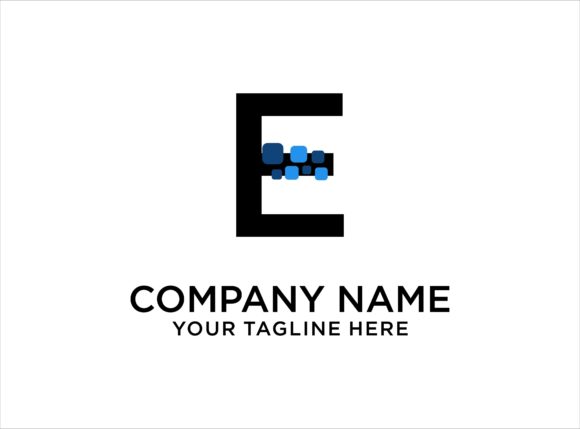
A standard typeface often lacks the personality required to build a full visual identity. When you are looking at a Letter E Digital Logo Design Template, you are looking at more than just a letter; you are looking at a piece of abstract art designed for commercial application. These templates are usually built with vector technology, meaning the lines are crisp, scalable, and ready for any medium. The appeal lies in the modern typography and the clever use of negative space. Instead of a simple serif or sans serif font, these designs often incorporate geometric shapes, 3D effects, or minimalist line work to create a logotype that feels like a symbol rather than just a character.
For a startup in the tech sector or a digital agency, the "digital" aspect of the design is crucial. It suggests connectivity, networks, and speed. The visual language often includes elements that mimic pixels, circuitry, or fluid motion. However, the beauty of a vector file is its flexibility. You can take that modern, tech-inspired concept and adapt it. By adjusting the stroke weight or the color palette, a design that initially looks like a high-tech icon can be softened to fit a creative consultancy or a lifestyle brand. It is about finding the balance between the abstract concept of "technology" and the concrete need for "business identity."
Practical Applications for Your Brand
Once you have selected a design that resonates, the real work of implementation begins. A logo is just the starting point. To build a cohesive brand, that specific shape and style need to be carried across every touchpoint where your audience interacts with you. This ensures visual consistency, which is the bedrock of brand recognition. If your logo is a sharp, angular, 3D rendering of the letter E, your other design assets should share that same sense of depth and precision.
Here is how you can practically apply a Letter E Digital Logo Design Template across various projects:
- Digital Presence: Use the vector icon as your primary favicon and social media profile picture. On your website, the clean shape works perfectly for a loading animation or a watermark on digital products. For mobile apps, the simple, bold nature of a logo template ensures it remains legible even on small screen sizes.
- Marketing Assets: When creating email headers, webinar slides, or digital ads, the letter E can serve as a recurring graphic element. You can pull parts of the design—like a specific curve or color gradient—to create backgrounds or borders that tie the marketing materials back to the main logotype.
- Print and Merchandise: Because the source is a vector, you do not have to worry about pixelation when printing on business cards, letterheads, or large-format posters. For merchandise like t-shirts or tote bags, a clean, abstract symbol often looks more professional and trendy than a wordy text logo.
- Packaging and Editorial: In packaging design, the monogram can be embossed or debossed for a tactile feel. In editorial layouts, such as magazines or blogs, the logo can be used as a drop cap or a divider element to maintain the brand's visual flow.
Matching Style to Strategy
Choosing the right design template is not just about aesthetics; it is about strategy. You have to ask yourself what the shape communicates. A rounded, sans-serif style E feels friendly, open, and accessible—great for a community app or a wellness brand. A sharp, serif-based design with heavy lines might convey tradition, authority, and luxury, suitable for a financial firm or a high-end boutique. Meanwhile, a design that utilizes negative space or a "line" aesthetic feels minimal, sophisticated, and intelligent.
When integrating this into your branding, consider the typography you pair it with. If your logo is highly decorative or abstract, your supporting text—headlines, body copy, and captions—should likely use a clean, legible font. This creates a hierarchy that guides the viewer's eye. You want the logo to be the star, and the text to be the supporting cast. Testing these pairings is a critical step. Mock up your logo on a website header, a mobile app screen, and a business card before finalizing your choice. Does the icon hold its weight? Is the concept clear? Does it look professional?
Ultimately, the goal is to create a visual shorthand for your business. Whether you are a graphic designer building a portfolio, an entrepreneur launching a new tech platform, or a content creator looking to unify your channels, starting with a strong, versatile vector symbol provides a solid foundation. It allows you to build out a comprehensive visual system that feels modern, intentional, and ready for the digital age.